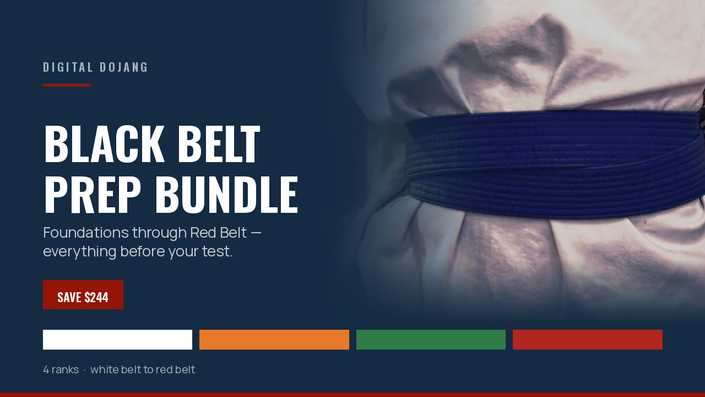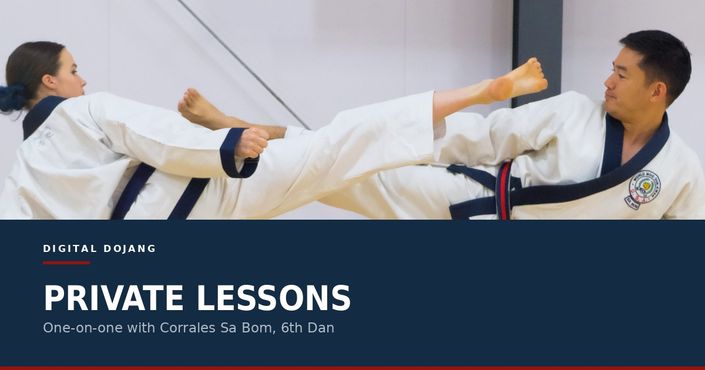
The last stretch before black belt. Bassai, Naihanji Cho Dan, Chil Sung E Ro, advanced one-steps and self defense — plus the complete Cho Dan testing process.
- 3Rank levels
- 3Forms
- 40+Lessons
- ∞Lifetime access
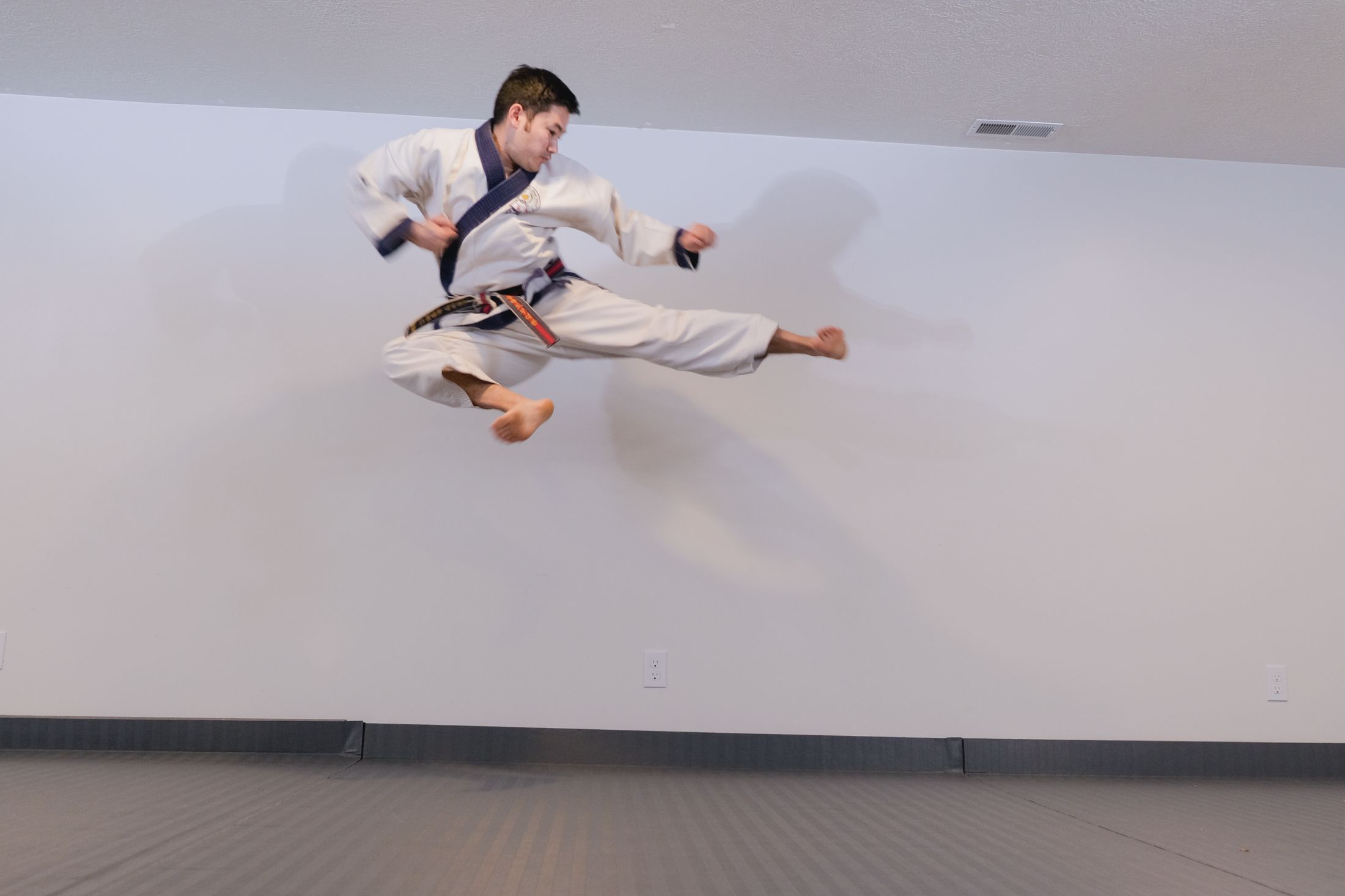
The last stretch.
Every rank tested, then certified — right up to Cho Dan.
Everything between here and black belt
Bassai, Naihanji, and the complete Cho Dan testing process
Red belt is where the curriculum shifts from forms practice to black belt preparation. You'll learn Bassai and Naihanji Cho Dan — two of the classical forms shared across the Korean and Okinawan karate family — alongside Chil Sung E Ro, advanced one-step sparring, and a full review of self-defense (Ho Sin Sul) technique.
The second half of the course is the Dan testing process itself: eligibility requirements, what to prepare six months out and one month out, written test preparation, and the official written test content. Nothing about Cho Dan testing is left as a surprise.
Dan-level rank testing still requires an in-person evaluation through the Federation — this course prepares you completely for that evaluation, but doesn't replace it.
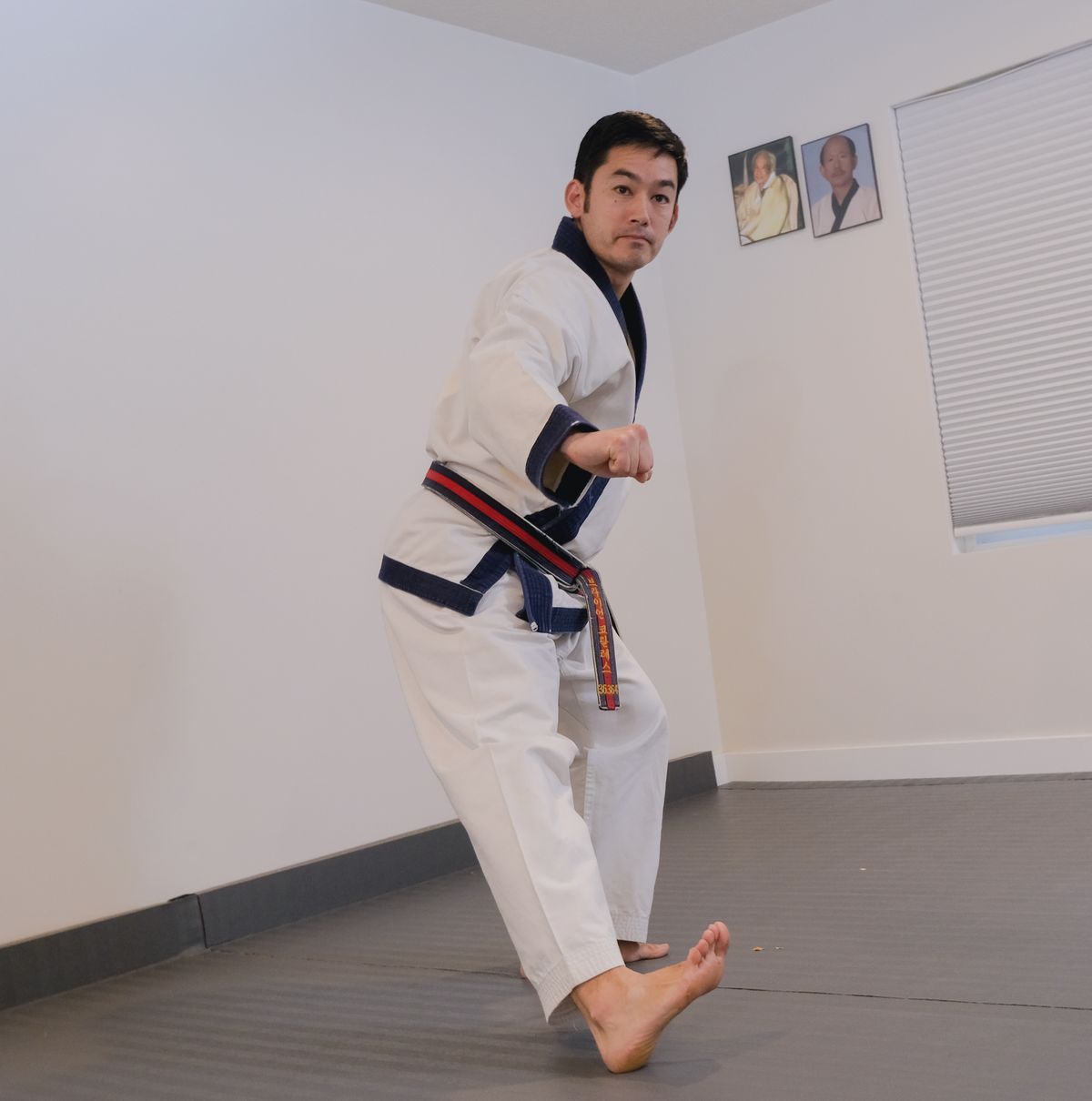
What's covered
Forms
Bassai (21 min) and Naihanji Cho Dan (10:39), plus Chil Sung E Ro — taught in full with breakdown lessons.
Basics
Combination techniques (23:32) and continued leg stretching work as the pace and intensity increase.
Applications
Advanced one-steps through number 18, 2-on-2 wrist grabs, side and back wrist grabs, and a full self-defense (Ho Sin Sul) review.
Dan test prep
Eligibility, the six-month and one-month countdowns, written test preparation, and the official written test itself.
Sparring
Moo Do Jaseh in Ja Yu Dae Ryun — free sparring principles and posture.
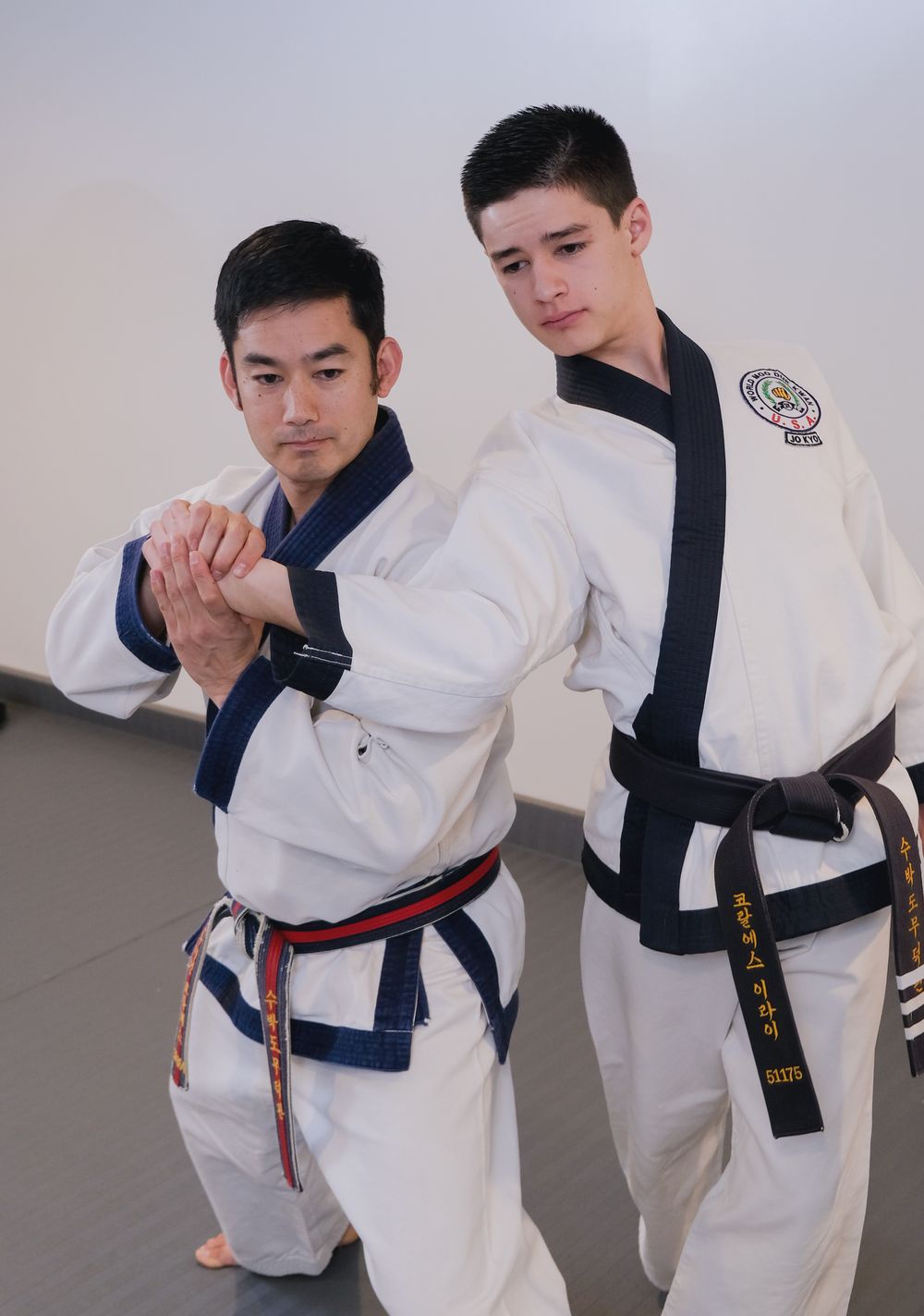
— Ho Sin Sul · Self-defense & wrist grabs
Example Curriculum
- 3rd Gup to 2nd Gup Requirements
- Soo Gi - Hand Techniques (1:17)
- Pyung Ahn O Dan (1:01)
- Pyung Ahn O Dan Part 1 (1:45)
- Pyung Ahn O Dan Part 2 (4:59)
- Pyung Ahn O Dan Part 3 (1:58)
- Pyung Ahn O Dan Part 4 (1:13)
- One Step 7-8 (children) (2:38)
- One Steps 11-12 (1:58)
- One Step 13-14 (adults) (4:13)
- 2 on 2 Wrist Grabs (11:19)
- Terminology
- Quiz
Test for rank when you're ready
Rank evaluation is optional and sold separately. The curriculum stands on its own — plenty of students train it purely as reference, or to sharpen what they already practice elsewhere.
If you do want certified rank, every section of this course includes the full testing requirements for that level, the video submission standards, and a demonstration example. You'll receive a detailed evaluation from Brian Corrales, Sa Bom, with certification issued through Wasatch Martial Arts Academy under the World Moo Duk Kwan.
Learn about certificationWhat an evaluation involves
- Train consistently. Around two hours a week for three to four months at your current rank.
- Record your video. In uniform, full body in frame, with room to move freely.
- Demonstrate the basics. Blocks and strikes on both sides, kicks from both angles, following the format given in your rank section.
- Announce and perform your form. Name it, then run it, exactly as shown in the example video.
- Submit and receive feedback. A detailed evaluation of your performance, with certification on passing.
Certified rank requires membership in the US Soo Bahk Do Moo Duk Kwan Federation or your country's World Moo Duk Kwan affiliate. No membership is needed to take the course. One-steps, wrist grabs and breaking require a partner.

Your instructor
Brian Corrales, Sa Bom — 6th Dan
- Certified Sa Bom — master instructor
- USA Technical Advisory Committee
- Moo Duk Kwan Heritage Liaison, appointed 2021
- 20 years of teaching experience
- 35+ years of consistent training
Brian's background is in the system founded by Hwang Kee in 1945 — the source of both Tang Soo Do and Soo Bahk Do, and one of the roots of modern Tae Kwon Do. It draws on Okinawan karate, Tan Tui, Ba Duan Jin, Tai Chi and Kwon Bup as documented in the Moo Yei Do Bo Tong Ji.
Sa Bom is the highest teaching certification the art offers, designating a master model instructor. Brian holds two national appointments from Kwan Jang Nim H.C. Hwang.
Questions
Do I need the Green Belt course before starting Red Belt? ▼
What forms do you learn in the Red Belt course? ▼
Does completing this course mean I'm certified Cho Dan? ▼
I already hold a black belt or Dan rank in another organization. Is this course for me? ▼
How long does it take to prepare for a Cho Dan (black belt) test? ▼
What equipment do I need for the Red Belt course? ▼
Do I get lifetime access to the Red Belt course? ▼
Example Featured Products
Showcase other available courses, bundles, and coaching products you’re selling with the Featured Products block to provide alternatives to visitors who may not be interested in this specific product.